Posts

Showing posts with the label Government Policy

From Farm Laws to Farmer Protest

Image
On 17 th September 2020, Lok Sabha passed the three farm laws - (i) Farmer's Produce Trade and Commerce (Promotion and Facilitation) Bill, 2020; (ii) Farmer's (Empowerment and Protection) Agreement of Price Assurance and Farm Services Bill, 2020; (iii) Essential Commodities (Amendment) Bill, 2020 - followed by the Rajya Sabha on 20 th September 2020. The President of India, Ram Nath Kovind, gave his assent on 27 th September 2020. First bill relaxes restrictions governing purchases and sale of farm produce, the second relaxes restrictions on stocking under the Essential Commodities Act (ECA), 1955, and third introduces a dedicated legislation to enable contract farming based on written agreements. Status of Agriculture in India Agriculture in India is without a doubt, one of the most pertinent sectors of the Indian economy. Contributi...

Farm Law Controversy - Agriculture Reform 2020

Image
India is mainly an agricultural society/ country. Agriculture is the most important occupation for most of the Indian families. Agriculture is the backbone of the Indian economy and will continue to remain so for a long time (as it seems now). Indian agriculture is characterised by agro-ecological diversities in soil, rainfall, temperature and cropping season. Agriculture and its allied sector employ more than half of the workforce in the country. However, it contributes only about 17% of the GDP. Distribution of Farmland in India 86% of total farmers are small and marginal, and they only own 47% of the total agricultural land, medium farmers are 13%, and they own 44% of the land, and the rest belongs to large farmers (see figure 1). The average size of farm holdings gradually reduced from 2.58 ha to 1.57 ha (2017-18 data) due to fragmentation of landholding generations after generation. These small and marginal farmers have limited resources com...

The World After Coronavirus

Image
Pre and Post Coronavirus way of life Coronavirus or COVID-19 is now synonymous to lockdowns, curfews, massive airport screenings, quarantine and social distancing across the globe. It has affected every aspect of - political, economic, social, technological and cultural - life. The world as we know before the coronavirus and after the coronavirus is not going to be the same. There will be many fundamental changes in an individual's life, structural changes in the functioning of the society, and functional changes on the professional front. Already face masks, social distancing, priority to health etc. have become the new norm across the globe. Background On December 31, 2019, China reported the World Health Organization (WHO) about the outbreak of cluster of cases and pneumonia of an unknown cause in Wuhan City in Hubei province. On January 09, 2020, WHO issued a statement saying Chinese researchers have made "preliminary determination" of the virus as a nov...

Unemployment in India

Image
What is Unemployment? Unemployment refers to a situation in which the workers who are capable of working and willing to work do not get employed or fail to secure work or any other activity which gives them income or means of livelihood. People who are unfit for work due to physical reason or do not want to work are excluded from the category of unemployment. Basic Definitions 1. Workforce: A worker is one who participate in any economic activity. 2. Labour Force: It refers to the segment of population which supplies or offers to supply labour for production and therefore includes both employed and unemployed persons. 3. Labour Force Participation Rate (LFPR): It is defined as the percentage of persons in labour force (i.e. working or seeking or available for work) in the population. 4. Work Participation Rate: It is defined as the percentage of employed persons in the population. 5. Unemployment Rate: Is is defined as a number of unemployed people divided by th...

Hindi vs Regional Language Issue

Image
A Closer Look at India’s languages (Infographic), Credit: daytranslations.com The compulsory imposition of Hindi in schools under the draft National Education Policy (NEP) 2019 displeased non-Hindi speaking states like Tamil Nadu. After much backlash the clause was revised to make it non-mandatory. This was not the first time in the independence history of India that the issue of languages has arisen. It arose in the past, it will arise in the future. HISTORICAL BACKGROUND India has a rich heritage in terms of languages and every language spoken, even by the most remote areas, is respected by the Constitution. “History demonstrates that, from times immemorial, India has been a multilingual country, each language having a certain region in which it was supreme, but none of these regions truly constituted unilingual kingdom or principality.” In ancient India, Sanskrit was most prevailing language by the 'elites' and Pali was the medium of communication for 'lo...

Youth India - Untapped Power

Youth UNESCO Definition: Best understand as a period of transition from the dependence on childhood to adulthood's independence and awareness of our independence as a member of a community. Youth is a more fluid category rather than a fixed age group. Youth being enthusiastic, vibrant, innovative and dynamic in nature is the most important section of the population. They are the most valuable segment of the population and are not a ready laboratory to test the finished products of the state apparatus. Rather, they are the variables that should be utilized for creating new opportunities based on the skills of contemporary relevance. The youth of the nation are the trustees of prosperity. Youth force is dynamic in nature as most skills and orientations are acquired in this age. The youth can act ideally as a bridge between two generations. It is an age cohort that, if explained properly, can understand the need of flexibility in order to smoothen its own growth and development...

Universal Basic Income (UBI)

Image
The threat of -       a) Growing Automation,       b) The widening divide of wealth between the rich and the poor (concentration of wealth),       c) Reducing/Limited Formal sector jobs,       d) Informal sector jobs with no instability, and       e) Limited skilling and re-skilling of people pushed the world to consider different income redistribution concepts in the past few years. And one of the concepts that have received the most attention is the idea of Universal Basic Income or UBI. It is not a new idea, this idea of state-run Basic Income dates back to the early 16th century when Sir Thomas More argued in Utopia that every person should receive a guaranteed income, which was seconded by many scholars in coming years. Universal Basic Income, or UBI, is a model for providing all citizens of a country with a given sum of money, regardless of their income, resources or employment status. The purpos...

India and Rohingya Muslims

Image
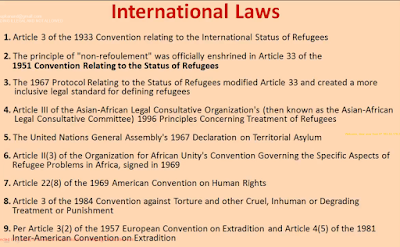
The long burning issue of Rohingya Muslim has suddenly became the center point of political discussions in India, many petitions have been filed in the Supreme Court (by the Rohingyas themselves). Indian government is insisting on deportation of Rohingya linking this decision with the National Security. But the core issue with the deportation is that Myanmar does not consider Rohigyas as their citizens, but consider them as immigrants. (For more on Rohingya read my earlier blog  here ). Repercussion of violence in Rakhine state of Myanmar (Western part) are felt around the world,  particularly in the neighboring countries like Bangladesh, India and other South East Asian nations. Due to the ongoing tension in Myanmar many Rohingya people fled Myanmar and over 40,000 made their way to India, many of whom are registered with UNHCR (United Nations High Commissioner for Refugees), and stay in refugee camps. The U nion Minster of state for Home Affairs Kiren Rijiju called them i...

Rohingya Tragedy

Image
About Rohingya: The controversy surrounding Myanmar's Rohingya people (Muslim) is evident in conflicting stories about the ethnic group's origin. Rohingya people are a stateless Indo-Aryan people from Rankine State Myanmar. The majority are Muslim, while a minority are Hindu. Rohingya Muslims numbers more than a million today in Myanmar.  The Burmese government and Burmese Historians argue that the Rohingya are actually Bengali Muslims, refusing to recognize the term "Rohingya".  They do not consider the Rohigyas as their citizens and consider them to be immigrants who brought in from Bangladesh during the British Colonial Era of 1824-1948. Majority of Rakhine Buddhists believe that "Rohingya" is a fabricated religious identity. They go on to cite historical document to claim that the Burmese past never had a community called Rohingya and that those who refer to themselves by the name are basically immigrants from modern day Bangladesh who were brough...